Sealing a 1,000 sq ft St. Petersburg Driveway Seven Months After Paving
Project overview
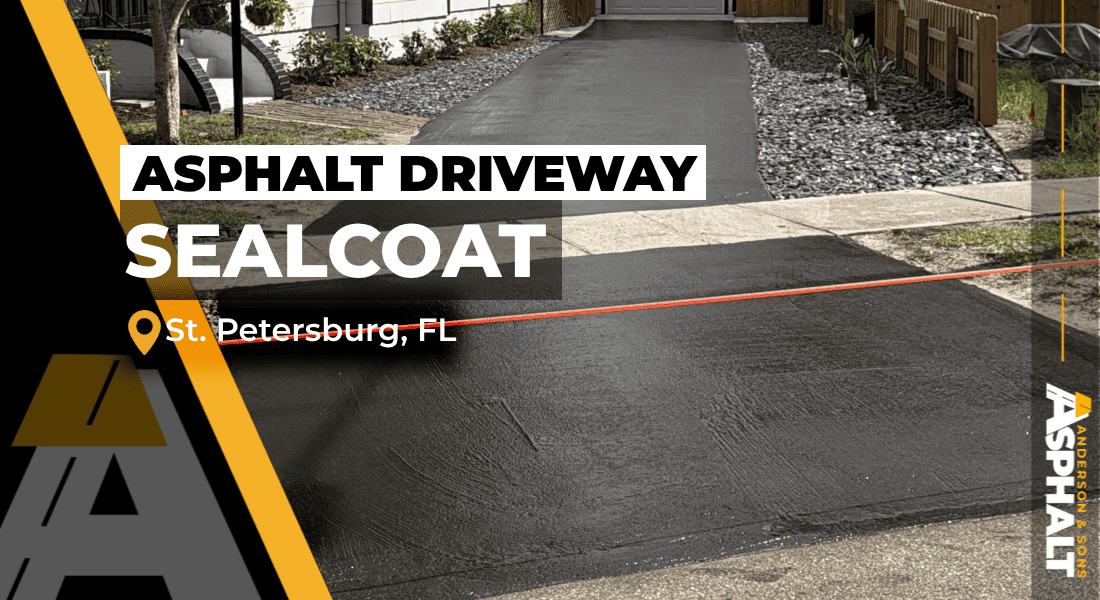
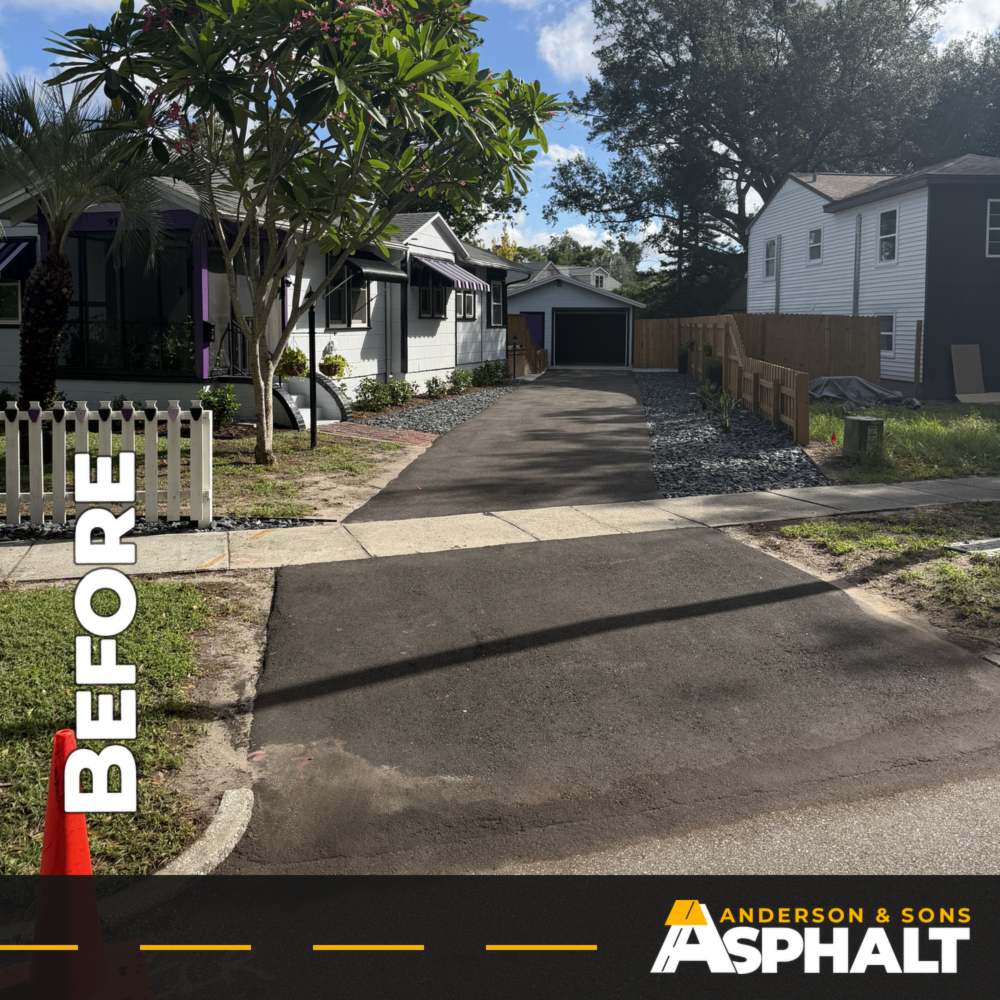
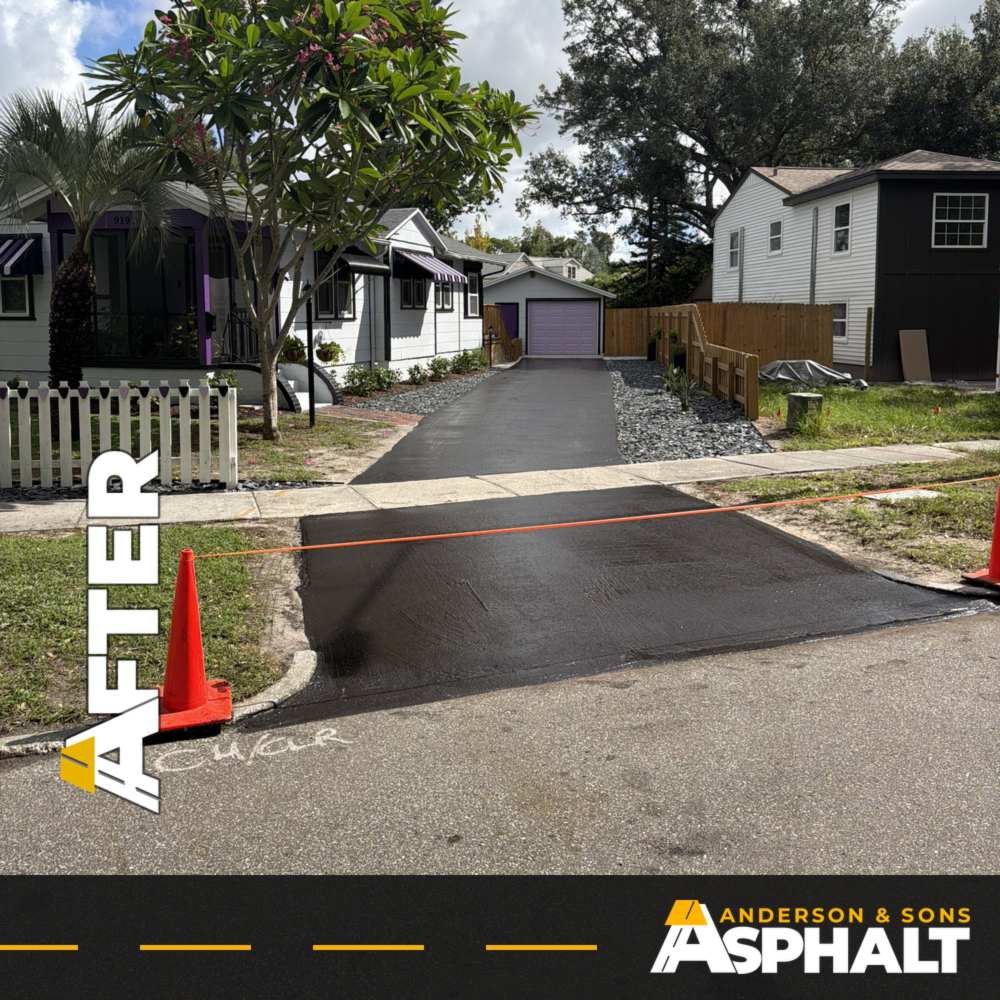
We paved this St. Petersburg driveway seven months ago and came back to seal it. The drive runs from the street, across the sidewalk, and back to a detached garage behind the house, with gravel borders along both sides.
After seven months of Florida sun, the new asphalt had already started to fade from black to gray. That’s normal for fresh pavement, and it’s the reason a first sealcoat is part of the job.
A new driveway’s first sealcoat, applied once the asphalt has had a few months to cure, sets it up to last.
Why wait before sealing new asphalt
Fresh asphalt needs time before it’s sealed. The oils in new pavement have to work their way out and the surface has to harden. Sealing too soon can trap them and leave the surface soft. Waiting a few months lets the asphalt cure first.
Once it has cured, sealcoat protects the surface from what wears Florida driveways down: sun that dries the asphalt out, rain that works into small cracks, and oil and gas drips from parked cars.
What this project demonstrates
Paving is the big investment, but the first seal is what protects it. On this job the whole 1,000 square feet got a fresh coat from the street apron back to the garage, and the driveway went from faded gray back to a deep, even black.
If we paved your driveway anywhere in St. Petersburg or Pinellas County and it’s starting to lose its color, it’s probably time for that first seal. We’ll take a look and let you know.
Get a Free Estimate
Driveway paving and sealcoating across St. Petersburg and Pinellas County.
Request Your Free Estimate