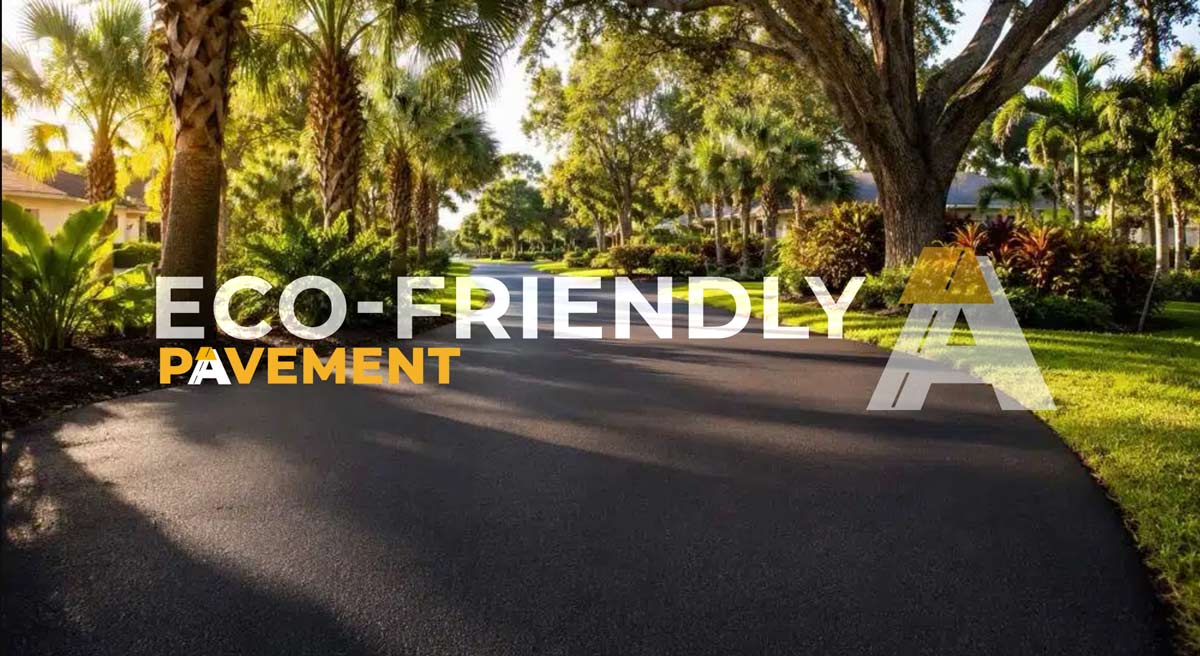
Why Asphalt Is More Eco-Friendly Than You Think — Especially in Florida
When most people in Pinellas County think about eco-friendly materials, asphalt doesn’t usually come to mind first. It’s black. It’s petroleum-based. It gets blistering hot in the Florida sun. And yet, if you dig a little deeper into how asphalt is actually made, used, and maintained, the environmental picture looks quite different from what most people assume.
The reality is that asphalt is one of the most recycled materials in the United States — and the industry has made significant strides in reducing emissions, conserving resources, and managing stormwater in ways that are genuinely good for the environment. For homeowners and property managers here in Tampa Bay, where Florida’s climate adds its own layer of complexity, those sustainability advantages are especially relevant.
Here’s what you should actually know about asphalt’s environmental footprint — and why it may be a smarter choice for this region than you’d expect.
1. Asphalt Is the Most Recycled Material in America
This surprises most people: the asphalt paving industry is among the largest recyclers in the entire country, recovering and reusing more material by weight than glass, paper, or aluminum combined. When old asphalt is milled up at the end of its useful life, it doesn’t head to a landfill — it gets reclaimed, processed, and blended back into new asphalt mixes through a process called Reclaimed Asphalt Pavement, or RAP.
The environmental benefits of RAP are substantial. Using recycled asphalt reduces the need to extract and transport virgin aggregate materials, which cuts both resource consumption and the fuel burned by mining and hauling equipment. It also means less waste going into the ground. Modern RAP technology has advanced to the point where high-recycled-content mixes — some incorporating up to 70% reclaimed material — perform on par with fully virgin asphalt in terms of durability and strength.
At Anderson & Sons Asphalt, we incorporate recycled materials into projects whenever it’s practical and technically appropriate. It’s something our clients in Largo and across Pinellas County benefit from both environmentally and on the bottom line, since recycled content typically helps reduce material costs.
2. Modern Production Methods Have Cut Emissions Significantly
Traditional hot-mix asphalt is produced at temperatures between 300°F and 350°F, which requires substantial energy and generates a meaningful amount of greenhouse gas emissions during production. But the industry has increasingly shifted toward a cleaner alternative: Warm Mix Asphalt (WMA).
WMA is manufactured at temperatures roughly 50–70°F lower than conventional hot mix. That reduction might not sound dramatic, but across the scale of road and pavement construction, it translates to real reductions in fuel consumption, carbon emissions, and worker exposure to fumes at the job site. Warm mix also compacts more easily, which can result in a denser, longer-lasting surface — meaning the pavement lasts longer before it needs to be replaced, which is itself an environmental benefit.
For Florida specifically, longer-lasting pavement is a meaningful sustainability factor. A driveway or parking lot that holds up for 20-plus years under our combination of UV exposure, heavy rainfall, and summer heat requires fewer resources over its lifetime than one that degrades quickly and needs early replacement.
3. Asphalt and Florida’s Water Management Challenge
Florida receives over 50 inches of rainfall per year, and Pinellas County handles some of the most intense storm events in the state. Managing where that water goes — and keeping it from overwhelming drainage systems, flooding properties, or carrying pollutants into Tampa Bay — is a genuine environmental concern for anyone with a paved surface.
This is an area where asphalt has made notable progress. Permeable asphalt — sometimes called porous asphalt — is designed with a more open structure that allows rainwater to pass through the surface and filter into the ground below, rather than running off the top. This reduces peak stormwater flow, helps replenish groundwater, and can filter out certain pollutants before they reach waterways. For commercial properties in particular, permeable paving can help meet local stormwater management requirements while also reducing the load on retention ponds and drainage infrastructure.
Even conventional asphalt, properly graded and installed with good drainage design, moves water away from structures efficiently. A well-installed asphalt driveway or parking lot directs rainfall to intended drainage points rather than letting it pool and infiltrate the sub-base, which protects the pavement itself while also reducing erosion and runoff. Our team’s guide on drainage solutions for Pinellas County asphalt covers how proper grading and drainage design extend pavement life — and how that connects directly to better stormwater outcomes.
4. Longevity Is a Form of Sustainability
One of the most overlooked environmental arguments for asphalt is simply how long it lasts when properly installed and maintained. A driveway or parking lot that holds up for 20 to 25 years consumes far fewer resources over its lifetime than a cheaper installation that fails in eight to ten years and has to be torn out and replaced. Every replacement cycle involves new material production, hauling, demolition debris, and construction activity — all of which carry environmental costs.
In Florida, the path to that long lifespan runs through consistent maintenance — and specifically through sealcoating. Sealcoating every three to five years creates a protective barrier against UV degradation, water infiltration, and chemical damage, all of which are especially aggressive in our climate. It’s a relatively low-cost treatment that meaningfully extends the life of the underlying asphalt. From a sustainability standpoint, preserving what’s already in the ground is almost always better than replacing it. Our team has written in detail about sealcoating benefits for Largo driveways and parking lots — including how it protects against our specific climate conditions.
5. Addressing the Heat Island Concern
It’s fair to raise the urban heat island effect as a concern with dark paving surfaces. Asphalt does absorb heat from the sun, and large paved areas can raise ambient temperatures in densely developed neighborhoods. This is a real phenomenon — but it’s also one the industry has been actively working to address.
Reflective sealcoat formulations and lighter-colored aggregate blends are increasingly available as options that reduce heat absorption without sacrificing durability. Permeable asphalt surfaces, as mentioned above, also tend to run cooler because water evaporating through the pavement has a natural cooling effect. And proper landscaping and shade trees around paved areas — a common recommendation for Florida properties anyway — go a long way toward offsetting heat accumulation.
In the broader context of material choices, it’s also worth noting that concrete, while lighter in color, carries a substantially higher carbon footprint in production. The manufacturing of Portland cement — the binding agent in concrete — is one of the most carbon-intensive industrial processes in the world. Asphalt production, by comparison, is significantly less emission-intensive, especially when warm-mix methods and recycled content are used.
6. Environmental Stewardship Starts With the Right Contractor
Not every asphalt project is managed with environmental considerations in mind. Stormwater best practices, responsible disposal of milled material, and the decision to incorporate RAP into new mixes all depend on how a contractor operates — not just what material they use. Construction activities can cause soil erosion, disturb drainage patterns, and generate waste if not handled thoughtfully.
When evaluating paving contractors in Pinellas County, it’s worth asking directly about their approach to recycled content, material disposal, and drainage planning. A contractor who can speak specifically to these practices — rather than offering generic assurances — is one who has actually thought through the environmental side of the work. Our team’s detailed post on environmental considerations in Florida asphalt paving projects outlines the specific practices we follow on every job.
For both residential and commercial clients across Tampa Bay, we bring the same approach: use recycled material where appropriate, manage drainage correctly from the start, and build a surface that lasts — because a surface that lasts is one that doesn’t need to be remade.
Ready to Get Started?
Whether you’re paving a new driveway in Largo or maintaining a commercial lot in Clearwater, choosing the right materials and the right contractor makes a measurable difference — in performance and in environmental impact.
Anderson & Sons Asphalt is a licensed and insured, family-owned business with decades of experience serving Pinellas County, Tampa Bay, St. Petersburg, and the surrounding communities. We offer honest assessments, straightforward pricing, and no-pressure estimates.
GET YOUR FREE ESTIMATE →